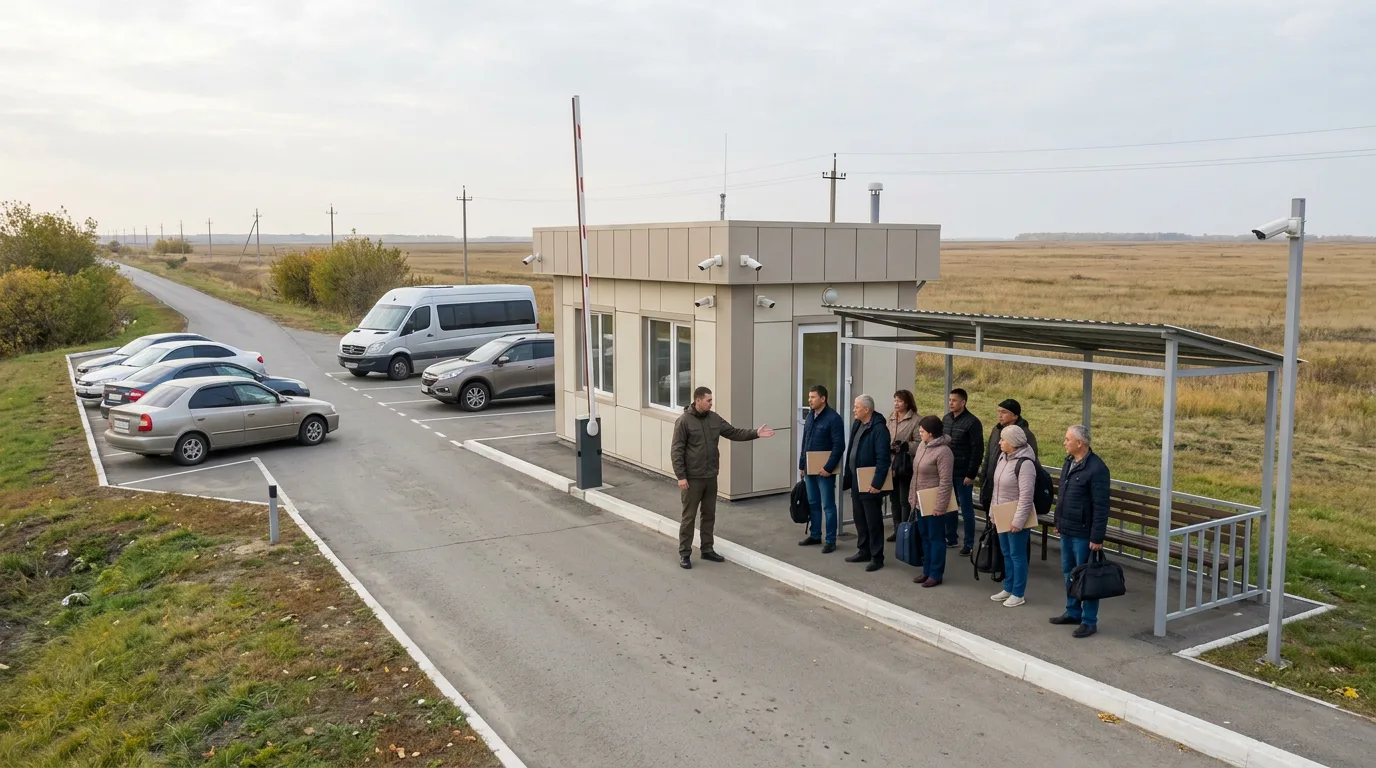
An additional Ministry of Internal Affairs of Russia control point (МВД) — the federal law enforcement agency responsible for internal security and migration control — is planned for the section of the Kazakhstan border in Kazansky District, Tyumen Region. According to the information available, this will be the first facility of this kind in the region. For companies whose candidates and employees enter through the Kazakhstan–Tyumen section of the border, the news is important primarily as a workforce-planning factor: checks along the route may become more thorough, and crossing the border may take longer.
What changes for hiring through Kazakhstan
The planned point has been described as an additional tool for controlling migration flows. This does not mean that new employment rules or separate employer obligations have already been published. However, companies arranging the arrival of foreign workers should take into account possible tighter checks on the entry route and should not schedule a person’s start date without a time buffer.
The change affects not only employers in Tyumen Region. Organizations from other regions should also take it into account if a candidate is traveling to Russia through the Kazakhstan–Tyumen section of the border. A separate risk group is staffing intermediaries: they need to align the arrival dates promised to the client with the worker’s actual route, rather than relying only on the departure date.
How to incorporate route checks into the HR process
It is useful to start with a register of candidates and current employees planning to enter through Tyumen Region. The register can record the intended route, travel date, the employer’s responsible contact, and the status of the preliminary document check. This will show which arrivals depend on a particular border section and where a delay could affect operations at a facility.
Before the trip, the employer should arrange a check of the passport, migration and authorization documents, as well as the grounds for working in Russia — to the extent applicable to the person’s specific status. This material does not establish a special list of documents for the new point and does not disclose the format of the checks. Therefore, workers should not be given unverified instructions about the procedure: the company’s task is to ensure that their documents and actual plans are consistent.
Why a start date should not be set in advance
Without a preliminary document check, a worker may face a delay during the inspection. For the employer, this means more than postponing the start date: the facility may experience a staff shortage, shifts may remain uncovered, and the HR department may have to urgently change accommodation, transportation, or work-access plans.
A practical solution is to separate the planned arrival date from the employee’s confirmed readiness to start work. Do not send a person to the workplace until the legality of their entry and completion of the mandatory procedures after arrival have been confirmed. The specific procedures required depend on the foreign national’s status; their list is not provided in the published material. After entry, migration registration — the procedure for notifying the authorities of a foreign national’s place of stay — and other applicable requirements must be completed on time.
Monitoring communications with the candidate
It is important to remind the worker that the information provided upon entry must not contradict the purpose of their actual stay and work. This is not a new rule specifically connected with the point in Kazansky District, but a preliminary-preparation measure stated in the reviewed material. The HR specialist should ideally give this reminder before the trip and make sure that the candidate understands their route and the subsequent procedure for contacting the employer.
It is equally important not to create false confidence about the timing. The opening date of the point, its operating hours, the exact list of documents to be checked, and possible entry restrictions are not specified in the available description. Appoint someone responsible for monitoring official announcements from the Ministry of Internal Affairs, the border authorities, and the regional authorities. After the operating procedure is published, that person will be able to adjust arrival schedules and internal instructions.
What the head of the HR function should check
The head of the function should assess the hiring operation’s dependence on a single route: how many people are traveling through Tyumen Region, which departments are expecting them soon, and who is responsible for the documents. This review does not require assuming new requirements, but it helps identify vulnerable vacancies in advance and ensure information is passed between the recruiter, HR specialist, and facility manager.
At present, decisions are based specifically on the plan to open an additional point, not on published regulations. Therefore, a reasonable approach is to be ready for possible tighter controls without replacing facts with assumptions. The company can check documents, allow extra time, and monitor official explanations, but it should not communicate to employees any deadlines or border-crossing rules that have not been confirmed by a source.
FAQ
What will change for employers after an additional Ministry of Internal Affairs checkpoint opens in the Kazan District?
The Ministry of Internal Affairs of Russia (MVD Rossii) plans to open the checkpoint as an additional tool for monitoring migration flows at the border with Kazakhstan. The Ministry of Internal Affairs of Russia is the federal authority responsible for migration control. New employment rules and separate employer obligations have not yet been published, but crossing the border may take longer.
Who needs to take this control checkpoint into account?
Companies whose candidates and employees enter through the Kazakhstan–Tyumen section of the border, including organizations from other regions, need to take it into account. Recruitment intermediaries should align promised arrival dates with the worker’s actual route.
Can an employer set a foreign worker’s start date in advance?
An employer should not schedule a start date without allowing extra time for crossing the border. A worker should not be sent to the place of work until the legality of entry and the applicable post-arrival procedures have been confirmed.
What documents will be checked at the new checkpoint?
The available description does not specify the exact list of documents to be checked or the format of the controls. An employer should verify in advance the passport, migration and work authorization documents, as well as the grounds for working in Russia, if these apply to the person’s status.
What to check
- Prepare a list of candidates and workers planning to enter through Tyumen Region.
- Record each worker’s entry route and their contact with the company’s responsible employee.
- Check the validity periods of passports, migration documents, and authorization documents.
- Check the grounds for working in Russia, taking into account the specific foreign national’s status.
- Allow extra time for crossing the border when planning the start date.
- Remind the worker not to provide information that contradicts the purpose of their actual stay and work.
- Do not send the worker to the workplace until the legality of their entry and completion of the applicable procedures after arrival have been confirmed.
- Appoint someone responsible for official announcements about the new control point.